
Get $500 off any new installation! →
Every summer in Colorado, the air tells a story. Skies turn a hazy orange, the smell of smoke drifts into neighborhoods, and AQI alerts start appearing on your phone. Denver isn't immune to the effects of wildfire season — and increasingly, the smoke doesn't just stay outside.
For homeowners with forced-air HVAC systems, that reality hits close to home. Your system pulls in air, circulates it through your house, and sends it back out — which means what's in the outdoor air eventually makes its way through your home. Whether your HVAC helps protect your family or unknowingly spreads smoke throughout your house depends almost entirely on what you have in place.
Here's what Denver homeowners need to know.
Colorado's wildfire season typically runs from June through September, though late spring and early fall fires aren't unusual. Smoke from wildfires contains a complex mix of harmful particles and gases, including:
PM2.5 is the most serious concern. The EPA considers PM2.5 above 35 µg/m³ unhealthy for sensitive groups — and during a significant wildfire event, Denver has seen readings exceeding 150 µg/m³. You can check real-time air quality conditions at
AirNow.gov or the Colorado CDPHE Air Quality Portal.
Even with windows closed, smoke infiltrates homes through gaps around doors, windows, fireplace dampers, and utility penetrations. But here's where it gets important: your HVAC system can either filter that smoke out or distribute it more efficiently through every room in your house.
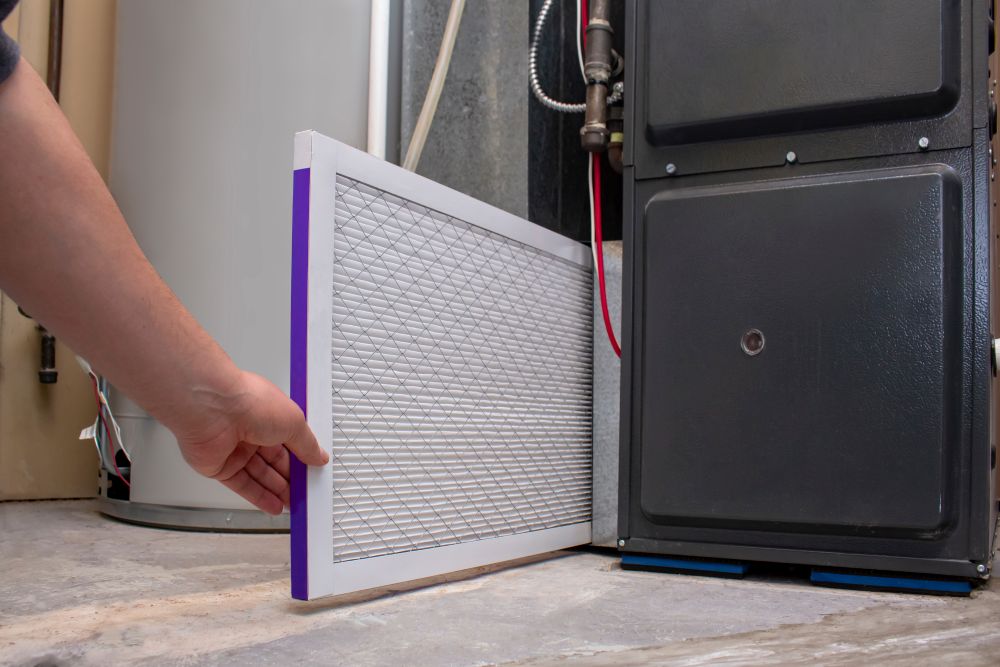
Standard 1-inch fiberglass filters — the ones most homes come equipped with — do almost nothing to stop fine smoke particles. They're designed to protect equipment from large debris, not to protect your lungs from PM2.5. When your system runs with a low-efficiency filter during a smoke event, it's essentially blowing contaminated air throughout your home on a loop.
Think of it this way: your HVAC system is either your first line of defense against wildfire smoke, or it's an accelerant. The difference comes down to filtration.
MERV stands for Minimum Efficiency Reporting Value — it measures how effectively a filter captures particles of different sizes. Here's a plain-language breakdown relevant to wildfire smoke:
Northwind installs MERV 11–16 filters and HEPA systems that integrate directly with your existing HVAC. If your current system can support a higher-MERV filter (not all systems can — our techs will check), upgrading your filter is one of the most cost-effective improvements you can make before fire season hits.
Important note: high-MERV filters restrict airflow more than standard filters. Installing a MERV 13 in a system designed for MERV 8 without proper evaluation can strain your blower motor. Our team will assess your system before recommending any upgrade. Learn more about our air filtration services.
Better filters are a great start, but for households with health sensitivities, children, or elderly family members, a more comprehensive approach makes sense. Northwind installs several whole-home systems that actively clean your air rather than simply catching particles as they pass through:
Unlike portable units that treat a single room, whole-home air purifiers and scrubbers integrate directly into your ductwork and treat every cubic foot of air circulating through your home. These systems use ionization technology to actively neutralize smoke particles, VOCs, bacteria, and odors — not just capture them.
UV lights installed inside your HVAC system use ultraviolet radiation to destroy biological contaminants — mold spores, bacteria, and viruses — before they circulate. During fire season, when windows stay closed and indoor air gets recirculated more heavily, UV systems provide a meaningful additional layer of protection.
For maximum particle capture, HEPA filtration systems — available through our IAQ installation services — remove 99.97% of airborne particles down to 0.3 microns. That includes PM2.5, smoke particles, and ultra-fine combustion byproducts that lower-rated filters miss.
Here's a compounding problem Denver homeowners often overlook: wildfire season overlaps almost exactly with peak allergen season. Cottonwood, grass pollen, and ragweed are all active from May through September — the same window as most significant fire events.
For allergy sufferers, this is a double hit. Smoke particles can carry pollen and mold spores deeper into the respiratory system than they'd otherwise reach, intensifying symptoms. If your home's filtration isn't up to par, you're dealing with both threats simultaneously through the same circulated air.
Upgrading your filtration before May gets ahead of both. And if your ductwork hasn't been cleaned recently, a professional duct cleaning removes accumulated dust, pollen, and debris that can get redistributed every time your system runs — compounding your air quality problems.
You don't need to wait for a tech visit to start improving your indoor air quality. Here are a few steps you can take today:
✅ Check your current filter's MERV rating. Look at the label on your existing filter. If it's below MERV 11, consider upgrading — especially before fire season.
✅ Set your thermostat fan to 'ON' during smoke events. Running the fan continuously (rather than only when heating/cooling) keeps air circulating through your filter, which helps clear smoke particles faster.
✅ Seal gaps around doors and windows. Weatherstripping and door sweeps reduce smoke infiltration points before it ever reaches your HVAC system.
✅ Monitor AirNow during fire season. When the AQI exceeds 100 (Unhealthy for Sensitive Groups), keep windows closed and run your HVAC on fan mode. Check real-time conditions at AirNow.gov.
✅ Schedule a pre-season IAQ assessment. Our team can evaluate your current filtration, check for duct leakage, and recommend the right solution for your home's size and your family's health needs.
Don't wait until the smoke rolls in to find out your HVAC system isn't up to the job. Our team can evaluate your home's current filtration, walk you through your options, and get the right system in place before June.
→ Book an IAQ Assessment We'll give you an honest assessment and upfront pricing — no surprises.


